
Projects play a crucial role in a student’s academic and professional journey. Whether it is a college assignment, final-year project, or a technical competition submission, projects help students apply their knowledge in real-world situations. A well-executed project demonstrates creativity, problem-solving ability, and practical skills.
However, many students make common mistakes while working on their projects. These mistakes can reduce the quality of their work and limit the learning experience. In some cases, these errors even affect grades, project presentations, and future job opportunities.
Understanding these mistakes and learning how to avoid them can help students create better projects and gain valuable experience. In this article, we will discuss the 10 mistakes students make in projects and provide practical solutions to improve project outcomes.
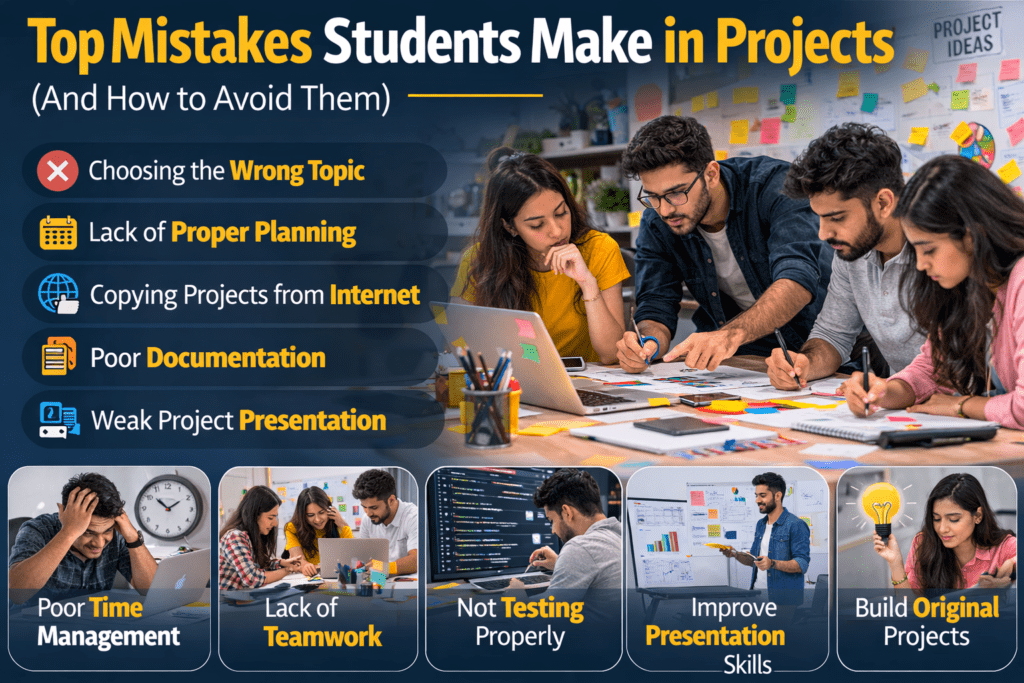
1. Choosing the Wrong Project Topic
One of the most common mistakes students make is selecting a project topic without proper research. Many students choose topics that are either too complicated or too basic.
A project that is overly complex may become difficult to complete within the given timeframe. On the other hand, a project that is too simple may not demonstrate enough skills or creativity.
Students should choose a project topic that:
- Matches their interests and skills
- Solves a real-world problem
- Allows them to learn new technologies
- Can be completed within the available time
Selecting the right topic ensures that students remain motivated and can successfully complete the project.
2. Lack of Proper Planning
Another major mistake students make is starting the project without a clear plan. Many students begin coding or designing immediately without defining objectives, requirements, or a project timeline.
Without proper planning, projects often face problems such as missed deadlines, incomplete features, and confusion during development.
Students should create a project plan that includes:
- Clear project objectives
- A list of tasks and milestones
- A development timeline
- Required tools and technologies
Planning helps students stay organized and ensures smooth project execution.
3. Ignoring Real-World Applications
Some students create projects that have little or no real-world relevance. While these projects may fulfill academic requirements, they do not add much value to a student’s portfolio.
Employers and project evaluators prefer projects that solve practical problems. Real-world applications show that students understand how technology can improve everyday processes.
For example, students can create projects related to:
- Smart home automation
- Online learning platforms
- Healthcare monitoring systems
- Business management tools
Projects that address real problems demonstrate innovation and practical thinking.
4. Copying Projects from the Internet

One of the biggest mistakes students make is copying projects from the internet without understanding how they work. Many students download ready-made projects and submit them as their own work.
While this approach may save time, it prevents students from learning valuable skills. When students copy projects, they struggle to explain their work during project presentations or interviews.
Instead of copying projects, students should focus on:
- Building projects from scratch
- Understanding each component of the system
- Experimenting with new ideas
Creating original projects helps students develop confidence and technical expertise.
5. Poor Documentation
Documentation is an important part of any project. Unfortunately, many students ignore documentation or complete it at the last moment.
Proper documentation helps explain:
- The purpose of the project
- The technologies used
- The development process
- Challenges faced during the project
Well-organized documentation makes it easier for others to understand the project and evaluate its effectiveness.
Students should maintain documentation throughout the project development process instead of leaving it for the end.
6. Weak Project Presentation
Even a well-developed project can fail to impress if the presentation is weak. Many students spend weeks developing their projects but do not prepare adequately for the final presentation.
During presentations, students may feel nervous, forget important details, or struggle to explain their work.
To avoid this problem, students should:
- Practice presenting their project multiple times
- Use clear and simple language
- Demonstrate the project with confidence
- Highlight the problem and solution clearly
A strong presentation can significantly improve how the project is perceived by teachers, judges, or employers.
7. Lack of Team Collaboration
In group projects, teamwork plays a major role in success. However, some students fail to collaborate effectively with their team members.
Common teamwork problems include:
- Unequal distribution of tasks
- Poor communication
- Lack of coordination
Successful teams ensure that every member contributes to the project. Regular meetings and open communication help teams stay aligned and complete tasks efficiently.
Team collaboration also prepares students for professional work environments where teamwork is essential.
8. Poor Time Management

Time management is another common challenge for students working on projects. Many students delay their work until the deadline approaches.
This last-minute approach often results in incomplete features, rushed development, and unnecessary stress.
Students should divide the project into smaller tasks and set deadlines for each stage. Consistent progress helps avoid last-minute pressure and ensures better project quality.
9. Ignoring Feedback from Mentors
Teachers and mentors provide valuable guidance during project development. Unfortunately, some students ignore feedback and continue working without making necessary improvements.
Mentor feedback helps students identify weaknesses in their project and find better solutions.
Students should actively seek feedback from instructors and use it to refine their project. This approach leads to better results and deeper learning.
10. Not Testing the Project Properly
Testing is a critical step in project development. Many students focus only on building the project and forget to test it thoroughly.
As a result, the project may contain bugs, errors, or incomplete functionality.
Students should test their project multiple times and ensure that all features work correctly. Testing improves the reliability and performance of the project.

Importance of Practical Project Experience
Projects provide an excellent opportunity for students to apply theoretical knowledge in real-world situations. A well-designed project helps students develop essential skills such as:
- Problem-solving
- Critical thinking
- Technical expertise
- Team collaboration
These skills are highly valued by employers and can significantly improve job prospects.
Professional training institutes often emphasize practical project development as part of their training programs.
Institutes like GTB Institute help students build real-world projects that demonstrate their abilities and prepare them for professional careers.
How Students Can Create Better Projects
Students who want to create successful projects should follow these best practices:
- Choose meaningful project topics
- Plan the project carefully
- Work consistently instead of rushing
- Seek guidance from mentors
- Practice presenting the project confidently
By following these steps, students can improve the quality of their projects and gain valuable learning experiences.
Conclusion
Projects are an essential part of a student’s academic journey. They provide an opportunity to apply knowledge, develop skills, and prepare for future careers.
However, many students make common mistakes such as choosing the wrong topic, copying projects, poor planning, and weak presentations.
Avoiding these mistakes can help students create better projects and gain meaningful learning experiences.
Students who focus on originality, planning, teamwork, and practical learning can develop projects that stand out and impress evaluators.
Institutes like GTB Institute guide students through structured training programs that emphasize real-world projects and skill development.
By learning from common mistakes and improving their project approach, students can build strong portfolios and prepare themselves for successful careers in technology and digital industries.